Why March 3 is the right day for Holika Dahan
Holika Dahan 2026 today: Know the correct date, Bhadra Kaal, Purnima tithi and eclipse timings
Holi celebrations have arrived this year with unusual confusion over the correct date for Holika Dahan. Many people were unsure whether the ritual should be performed on March 2 or March 3. The confusion arose because of the overlap of Bhadra Kaal, Phalguna Purnima tithi and the first lunar eclipse of 2026. However, based on the traditional Hindu calendar and commonly accepted guidelines, Holika Dahan 2026 is being observed today, March 3.
Religious experts explain that Holika Dahan must be performed on Phalguna Purnima in the evening, but it should not be done during Bhadra Kaal. This year, the timing of these factors created a narrow and slightly complicated window, leading to debate across different regions.
Why March 3 is considered appropriate
According to the Hindu calendar, Bhadra Kaal began at 5:45 pm on March 2 and continued until 5:23 am on March 3. Since Bhadra is considered inauspicious for Holika Dahan, most communities avoided performing the ritual on the evening of March 2.
Once Bhadra ended early on March 3, the situation became clearer. The Phalguna Purnima tithi had already started at 5:55 pm on March 2 and will remain in effect until 5:07 pm on March 3. Because the full moon tithi is still active today and Bhadra has finished, March 3 fits the traditional requirements for Holika Dahan.
Religious scholars generally agree that when Bhadra occupies the evening of Purnima, the ritual should be postponed until the next suitable evening window. That is exactly what has happened this year.
As a result, the most widely accepted muhurat for Holika Dahan today is from 6:22 pm to 8:50 pm. This evening period is considered auspicious and aligns with customary practice.
Impact of lunar eclipse and Sutak
Another major factor this year is the lunar eclipse occurring on March 3. The Chandra Grahan will begin at 3:20 pm and end at 6:46 pm. Because the eclipse is visible in India, the Sutak period started at 6:20 am this morning.
During Sutak, many devotees avoid auspicious activities, temple rituals and ceremonial functions. This has added another layer of planning for families preparing for Holika Dahan.
However, religious experts point out an important detail: the recommended Holika Dahan muhurat begins at 6:22 pm, while the eclipse ends at 6:46 pm. In practice, many communities prefer to perform the ritual after the eclipse influence is completely over. Therefore, local customs may slightly adjust the exact start time, with some people choosing to begin closer to or after the eclipse conclusion.
ALSO READ: Israel-US strikes on Iran trigger regional emergency; explosions reported across Gulf
ALSO READ: Pakistan launches retaliatory strikes on Afghanistan, tensions surge
It is common during such overlaps for regional traditions and temple authorities to issue specific guidance. Devotees are often advised to follow local priest recommendations.
Despite the timing complexity, astrologers emphasise that there is no long-term negative effect once the eclipse ends. Normal festive activities can continue afterward.
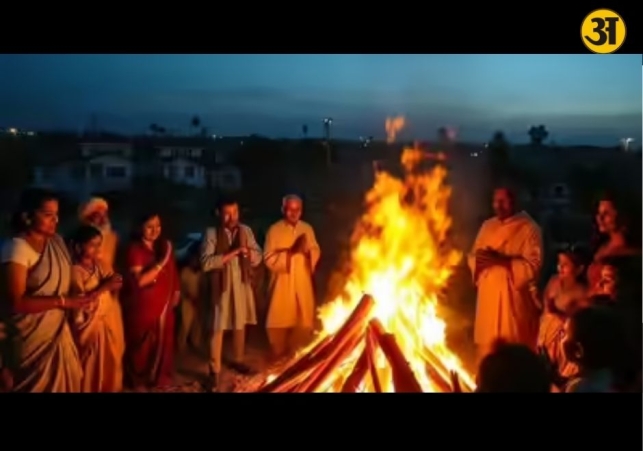
Holika Dahan holds deep cultural and spiritual meaning. The ritual symbolises the victory of good over evil and commemorates the story of Prahlad and Holika. On this evening, people gather around the sacred bonfire, offer prayers and perform parikrama (circumambulation) of the fire. The next day, March 4, is celebrated as Holi with colours, music and festive gatherings.
Authorities in several states have also made security and civic arrangements for smooth celebrations. Markets are witnessing increased activity as people purchase colours, sweets and festive items.
Astronomically, the lunar eclipse will be an additional point of interest for skywatchers. However, in India, the Moon is expected to rise around 6:26 pm, meaning viewers may only catch the final phase of the eclipse depending on local visibility.
Experts advise people to check local weather conditions for the best viewing experience. Unlike solar eclipses, lunar eclipses are safe to watch with the naked eye.
In summary, despite the initial confusion, March 3 clearly meets the traditional criteria for Holika Dahan this year. With Bhadra Kaal over and Phalguna Purnima still active, the evening muhurat provides the appropriate window for the ritual. After the eclipse ends and the bonfires are lit, the country will move into full Holi celebrations on March 4.
As families prepare for the festivities, the key message from religious authorities remains simple: follow the evening muhurat, respect local customs and celebrate the festival with joy and harmony.
Related News

.jpg)